The year 2014 saw the most progress, since purchase of the wood in 2011, in evolving the wood away from its unmanaged state towards one with a greater proportion of native deciduous species and with better vertical structure of vegetation. Main areas of progress included:
- Publication of a Management Plan
- Planting of a mixed variety of native deciduous hedging, with the aim of improving low-level structure within the wood. The RHS-sourced hedging was wildlife friendly and designed to reflect rural hedging. It consisted mainly of Crataegus monogyna, (Hawthorn) and smaller numbers of Prunus spinosa (Blackthorn), Corylus avellana (Hazel), Cornus sanguinea (Common Dogwood) and Acer campestre (Field Maple).
Late note: Almost none of the planted species survived the year. The lesson learned was that the wood will grow what the wood will grow. This experience, along with the poor germination of wildlife-friendly flowers, effectively put an end to any large scale attempts to plant new specimens.
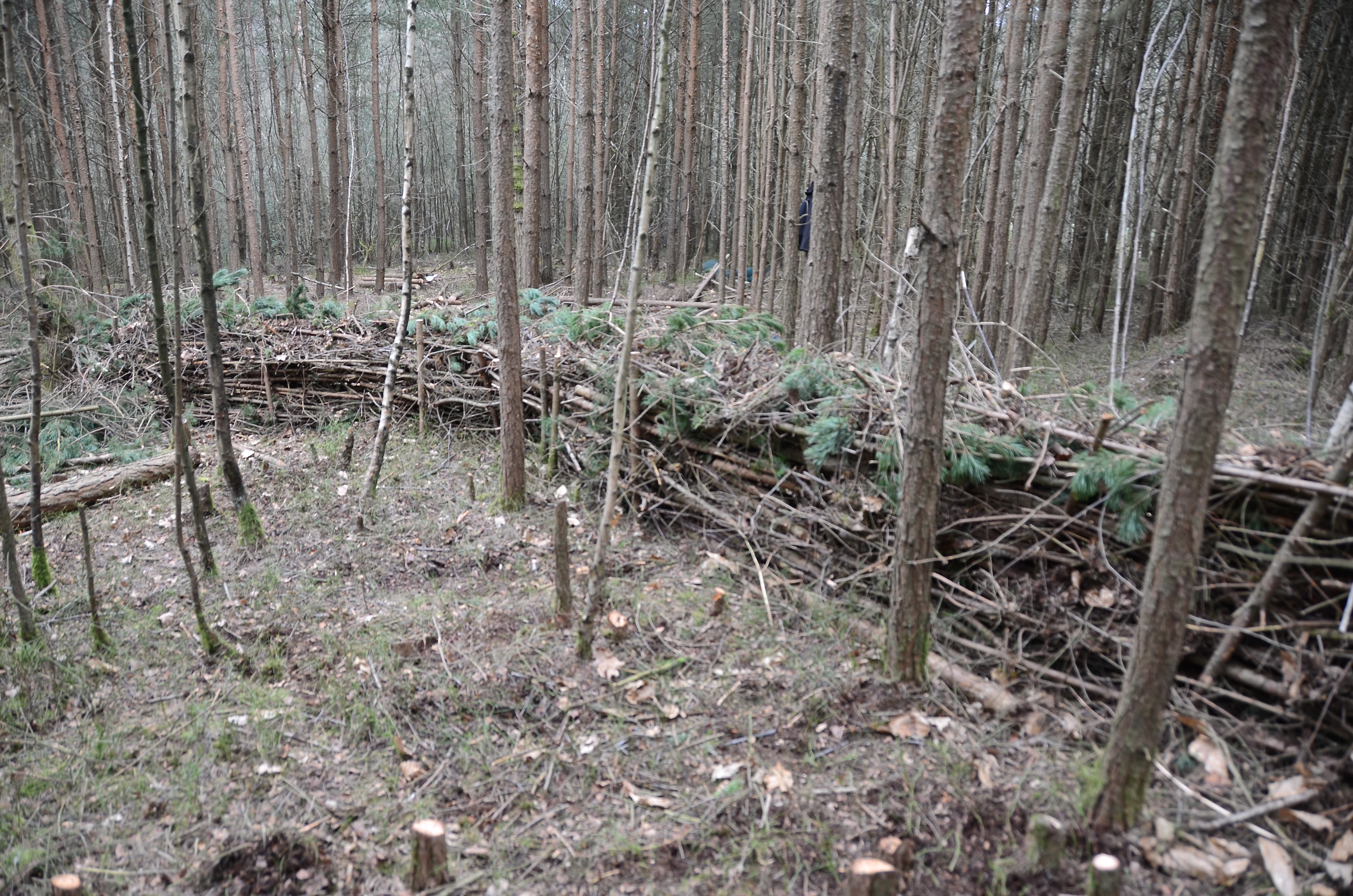
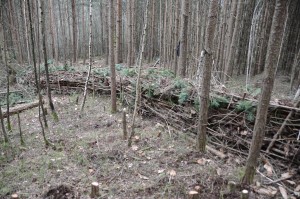 Felling of a substantial number of small, crowded Scots pine in subcompartment Com3 to provide more light for existing native deciduous trees such as oak and sweet chestnut. Pine and rhododendron waste material was turned into dead hedging. The lines run between the trunks of existing large deciduous trees, with occasional gaps where they intersect trails used by larger wildlife.
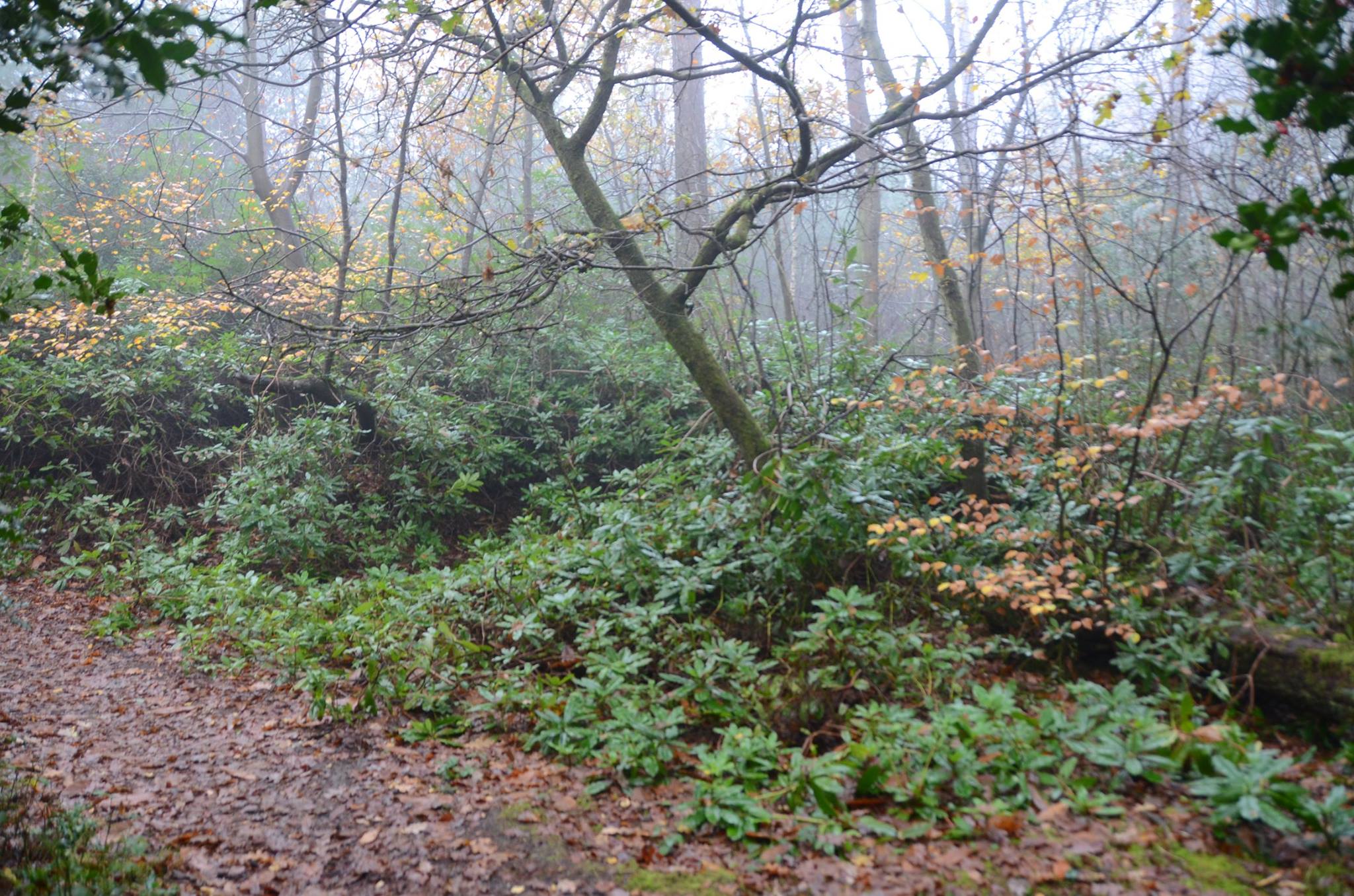
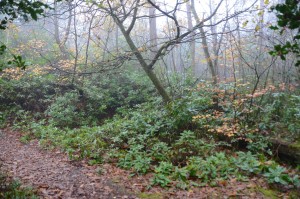 Clearance of many areas of rhododendron, particularly at the north end of Marjorie’s Path where a large area was cleared and replaced with native hedging.
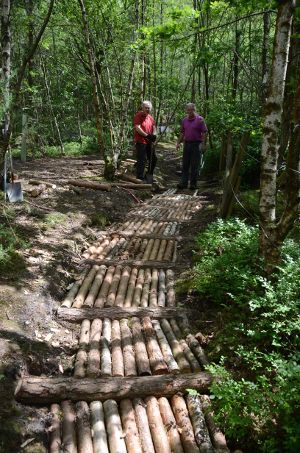
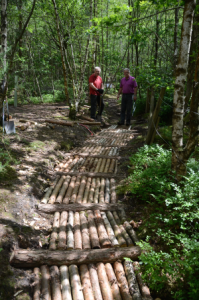 With the help of members of the Bourne Conservation Group, completed repairs to the footpath (FP218) running along the south-western boundary of Sable Wood.
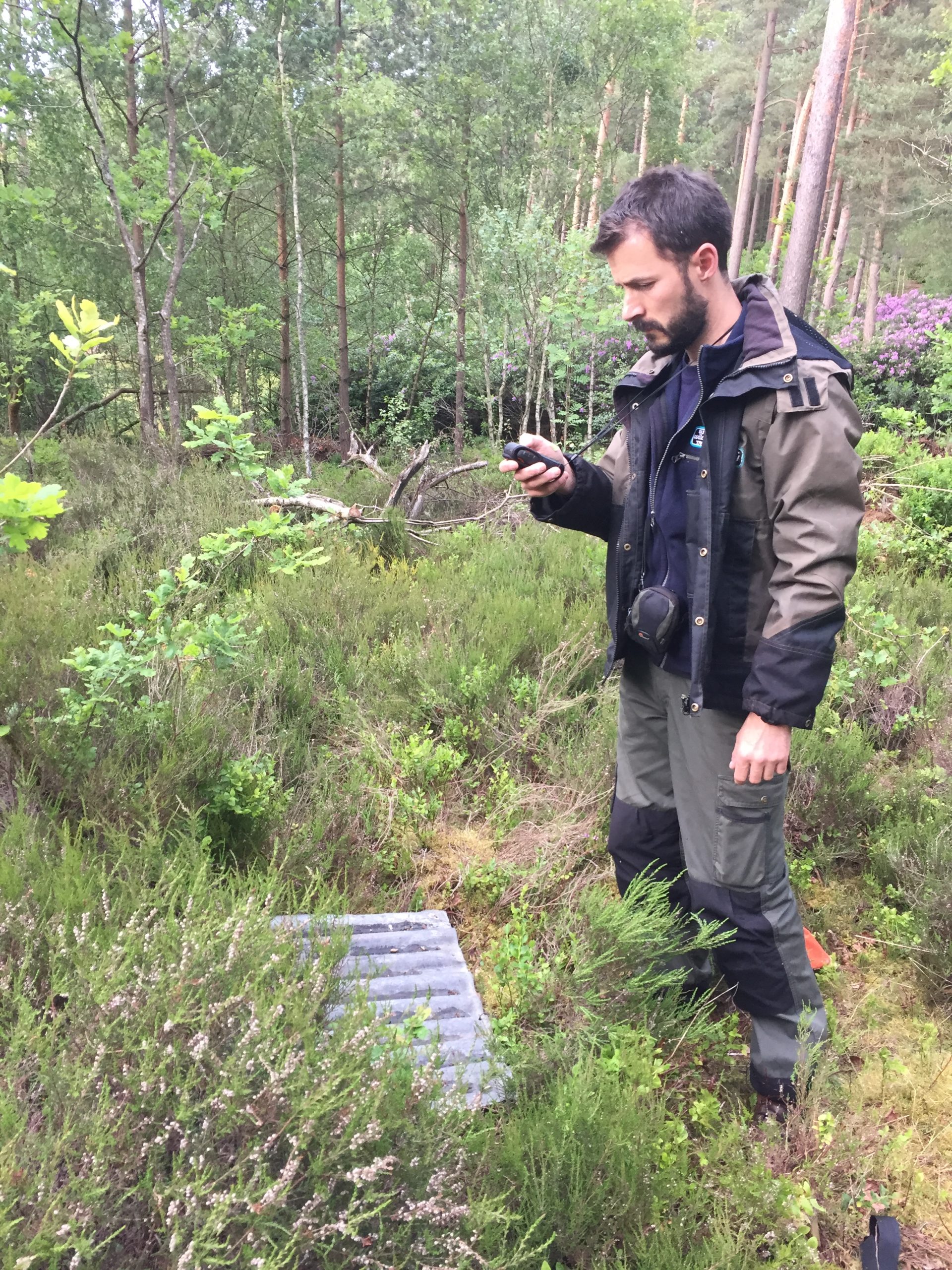
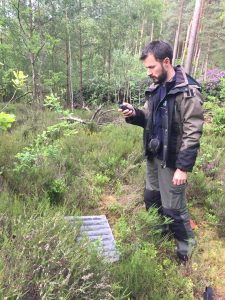 Installation of five refugia by Jamel Genioui of the Surrey Amphibian and Reptile Group (SARG) as part of its monitoring network. The refugia are surveyed approximately monthly outside the winter months.